How Moisture Wicking Fabric Moves Sweat Away From Skin
Posted by yongxing yongxing
Filed in Other 2 views
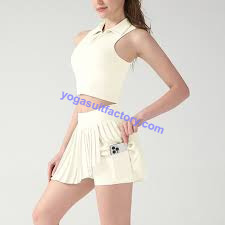
You know the moment: halfway through a set of deadlifts, the waistband slides down and you spend the rest of the workout hiking it up, which makes many people wonder how a good pair of High-waisted Leggings for Gym is actually built to prevent exactly that?
It starts with the waistband, which is really a small piece of engineering. A wide band cut on a gentle curve follows the natural shape of the torso, so pressure spreads across a broad area instead of concentrating on one thin line. Run a thumb along the inside of a well made one and you will often feel a slightly grippy, smooth finish that resists sliding against the skin.
Stretch is the next piece. Most performance leggings knit nylon or polyester with a fine elastane thread, and the knit is built so the fabric stretches in every direction and then snaps back. Pull a corner between two hands and let go, and good fabric returns almost instantly without leaving a baggy ripple. That recovery is what keeps the knees and hips from losing shape after a few weeks of squats.
Moisture handling works differently from what most people imagine. The inner surface of the knit is designed to pull sweat away from the skin through tiny channels between the fibers, and the outer surface spreads that moisture across a wider area so it can evaporate faster. When it works, you finish a hard session feeling damp but not soaked, and the fabric does not cling like a wet towel.
Seams are the quiet heroes here, though you rarely think about them until one rubs. Flatlock stitching joins two fabric edges side by side instead of overlapping them, so the seam lies almost level with the surface. I once wore a pair with a raised inner seam on a long treadmill session, and by the end I could feel a faint line along my thigh with every stride, which tells you how much a few millimeters of stitching can matter.
Compression is another function that gets misunderstood. Rather than squeezing evenly everywhere, many designs use zones where the knit is tighter, usually around the abdomen and thighs, and looser behind the knees where the leg needs to bend freely. The idea is gentle support for large muscles combined with room for joints to move, and a well tuned pair makes you notice the freedom more than the squeeze.
Then there is the gusset, a small diamond or panel of fabric sewn into the crotch area. Without it, four seams would meet at a single point, and that point would take the most strain during lunges, deep squats and high kicks. With it, the stress is distributed across a larger patch, which is why leggings with a proper gusset tend to last through many more washes before the stitching gives out.
Opacity depends on the density of the knit as much as the color. A tight, dense structure keeps its coverage when stretched over the hips, while a loose one thins out and lets light through at exactly the moment you bend over. A quick test I use is stretching a section over my hand under bright light, and a good fabric still looks solid rather than showing skin through a pale haze.
Small functional extras round out the design, such as a hidden pocket inside the waistband for a key or card, or a flat drawcord channel that adjusts the fit without creating a bump. These details look minor on a product page, yet during an actual workout they save you from carrying a bag to the squat rack or fiddling with a waistband that has drifted out of position.
If you want to see how these functions show up in real garments, browsing the range at https://www.yogasuitfactory.com/ lets you compare construction details across a wide range of styles, and I would pay special attention to how each page describes its waistband and seams. Understanding what High-waisted Leggings for Gym are actually doing under the surface makes it much easier to judge which pair deserves a place in your training rotation.